
Faster-than-light travel: Are scientists closer to the answer?

For decades, the idea of faster-than-light (FTL) travel has fascinated scientists and science fiction fans. According to Einstein’s theory of relativity, nothing can travel faster than the speed of light in a vacuum—about 299,792 kilometers per second (186,282 miles per second). But new research suggests that FTL travel may not be entirely impossible. Could we one day reach other star systems in days instead of centuries?
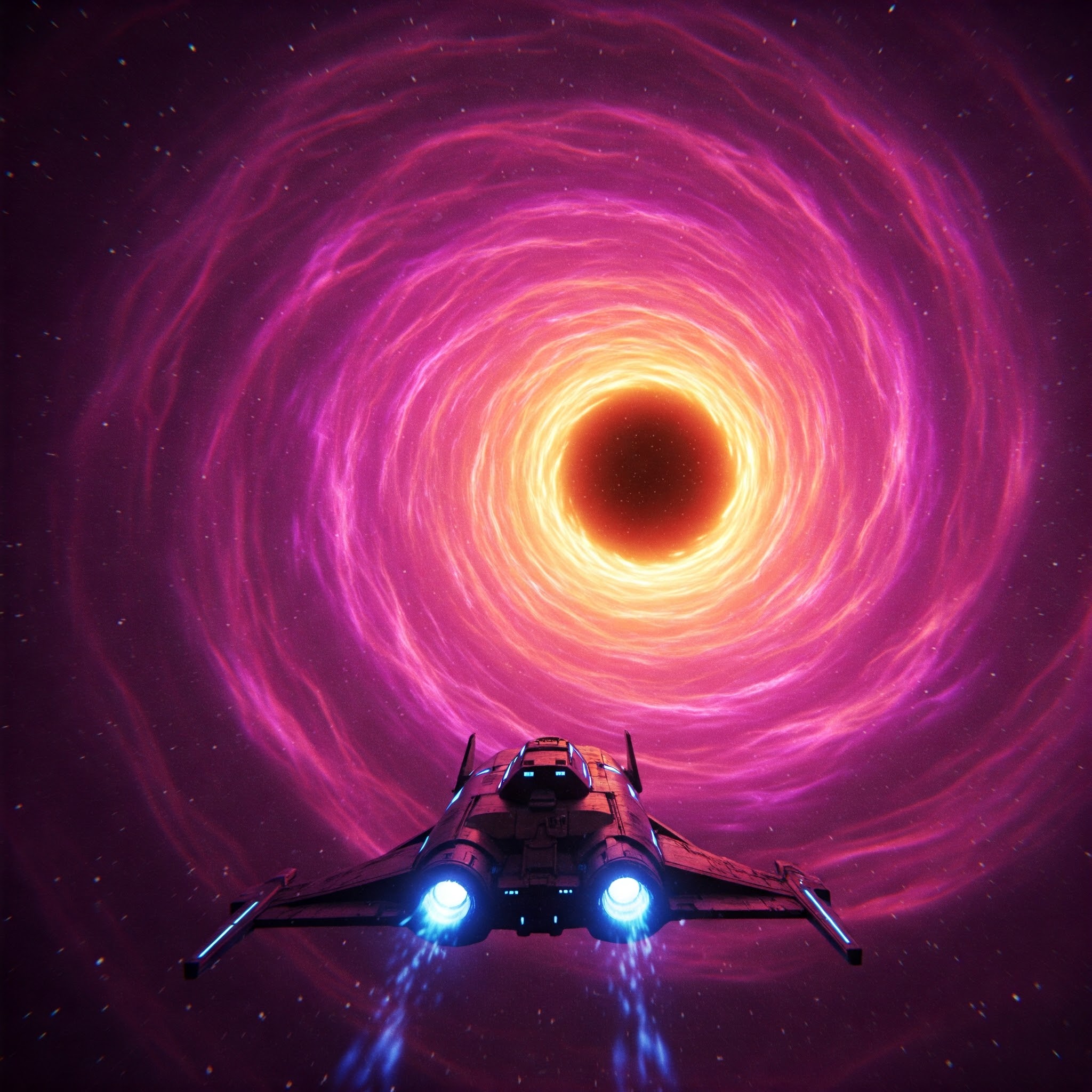
A Breakthrough in Faster-than-light Research

1. Alcubierre’s Warp Drive

In 1994, physicist Miguel Alcubierre proposed a theoretical model in which space itself contracts in front of a spacecraft and expands behind it, creating a “warped bubble.” This idea, inspired by Einstein's equations, suggests that a spacecraft could travel faster than light without violating the theory of relativity, since it would technically remain stationary inside the bubble.

2. Tachyons and Exotic Particles

Some theories suggest the existence of hypothetical particles called tachyons that always travel faster than light. However, their existence remains unproven, and they would require infinite energy to slow down to sub-light speeds.

3. Quantum Tunneling and the Casimir Effect

Quantum mechanics offers intriguing possibilities, such as quantum tunneling, where particles seem to "teleport" through barriers. The Casimir effect, which involves manipulating the energy of the vacuum, has also been explored as a potential method for FTL motion.

Key institutions and scientists conducting research

NASA Eagleworks Laboratory (USA) – research into warp drive physics and quantum propulsion.

European Space Agency (ESA) – studying advanced space propulsion technologies.

Harold “Sonny” White – physicist working on improving the Alcubierre warp theory.

Theoretical physicists at CERN – studying exotic particles and concepts of space-time warping.

FTL in numbers: how far can we go?

If FTL travel were possible, reaching the nearest exoplanets would take a fraction of the current estimated time:

What do astronomers and scientists say?

Many astrophysicists remain skeptical but open-minded:

Stephen Hawking (1942–2018) suggested that while FTL travel contradicts the theory of relativity, unknown physics could change our understanding.

Nobel Prize-winning physicist Kip Thorne has explored the concept of wormholes as a possible shortcut through space-time.

Avi Loeb, an astrophysicist at Harvard, believes that if advanced civilizations exist, they may already have found ways to bypass the speed of light limit.

The Future of FTL Travel

While there is currently no practical method of FTL travel, breakthroughs in quantum physics and the manipulation of space-time could bring us closer than ever. If scientists unlock the secrets of warping space or harnessing dark energy, interstellar travel could become a reality in the coming centuries.

Could the next big discovery change the laws of physics? Only time will tell.

Stay up-to-date with the latest space discoveries on Natural World 50!

Comments

IN TREND

Green Energy Costs to 2035: Prices & Trends

Green Energy Costs to 2035: Why Solar and Wind May Rise While Batteries Fall The global renewable energy revolution is accelerating. Governments, corporations, and households are investing billions in green energy systems. Yet a paradox is emerging: while the cost of generating solar power and wind energy may increase in the coming decade, battery storage prices are projected to decline significantly. Why is this happening? And what will it mean for consumers and investors by 2035? This evergreen analysis explores the economic forces shaping energy markets, provides price forecasts in U.S. dollars, and explains how global trends could redefine the cost of clean electricity. Why Green Energy Became So Affordable Over the past 15 years, renewable technologies have experienced dramatic cost reductions. According to the International Renewable Energy Agency (IRENA) , global weighted-average costs of solar photovoltaic electricity dropped by nearly 90% between 2010 an...

Top 10 Most Endangered Animals in the World (2025 Update)

Updated in 2025: Habitat destruction, climate change, and poaching are pushing countless species toward extinction. Here are the 10 most endangered animals in the world right now – and how we can still help save them. Sources: IUCN Red List, WWF, National Geographic, Wildlife Conservation Society 🦍 1. Cross River Gorilla ( Gorilla gorilla diehli ) Status: Critically Endangered Population: Fewer than 300 This elusive gorilla species lives in remote forests on the Nigeria-Cameroon border, threatened by habitat fragmentation and illegal hunting. 🐯 2. Amur Leopard ( Panthera pardus orientalis ) Status: Critically Endangered Population: About 120 Native to the Russian Far East, it’s the rarest big cat, threatened by poaching and habitat loss. 🐢 3. Yangtze Giant Softshell Turtle ( Rafetus swinhoei ) Status: Critically Endangered Known survivors: 2 Only two are known to exist. Breeding efforts are critical to preventing extinction. 🐬 4. Vaquita ( Ph...

The 10 Most Treacherous Seas and Oceans on Earth

 The ocean is a majestic force of nature — vast, mysterious, and at times, deadly. From massive rogue waves to invisible underwater currents, some parts of our blue planet are especially unforgiving. Here are the 10 most treacherous seas and oceans in the world where danger is always lurking beneath the surface. 1. The Bermuda Triangle (North Atlantic Ocean) A zone of unexplained disappearances, the Bermuda Triangle remains one of the ocean’s greatest mysteries. Countless ships and planes have vanished without a trace, fueling legends and conspiracy theories. 2. The Drake Passage (Southern Ocean) Located between Cape Horn and Antarctica, the Drake Passage is infamous for brutal winds and towering waves, making it one of the most dangerous shipping routes on Earth. 3. The South China Sea Highly trafficked and prone to violent typhoons, the South China Sea presents both natural and political hazards. Its unpredictable storms can capsize even large vessels. 4. The North Sea Though rel...