Vesuvius’s Deadly Cloud: Archaeological Discoveries That Will Shock You
Vesuvius, one of the deadliest volcanoes in history, erupted in 79 AD, burying the cities of Pompeii, Herculaneum, and Stabiae under a thick layer of ash and volcanic debris. Recent archaeological excavations have revealed astonishing details of the deadly pyroclastic surge—a superheated cloud of ash, gas, and rock that traveled at speeds of over 100 km/h (62 mph) and reached temperatures of up to 500°C (932°F). The discoveries provide a chilling glimpse into the final moments of the victims and the sheer power of nature.
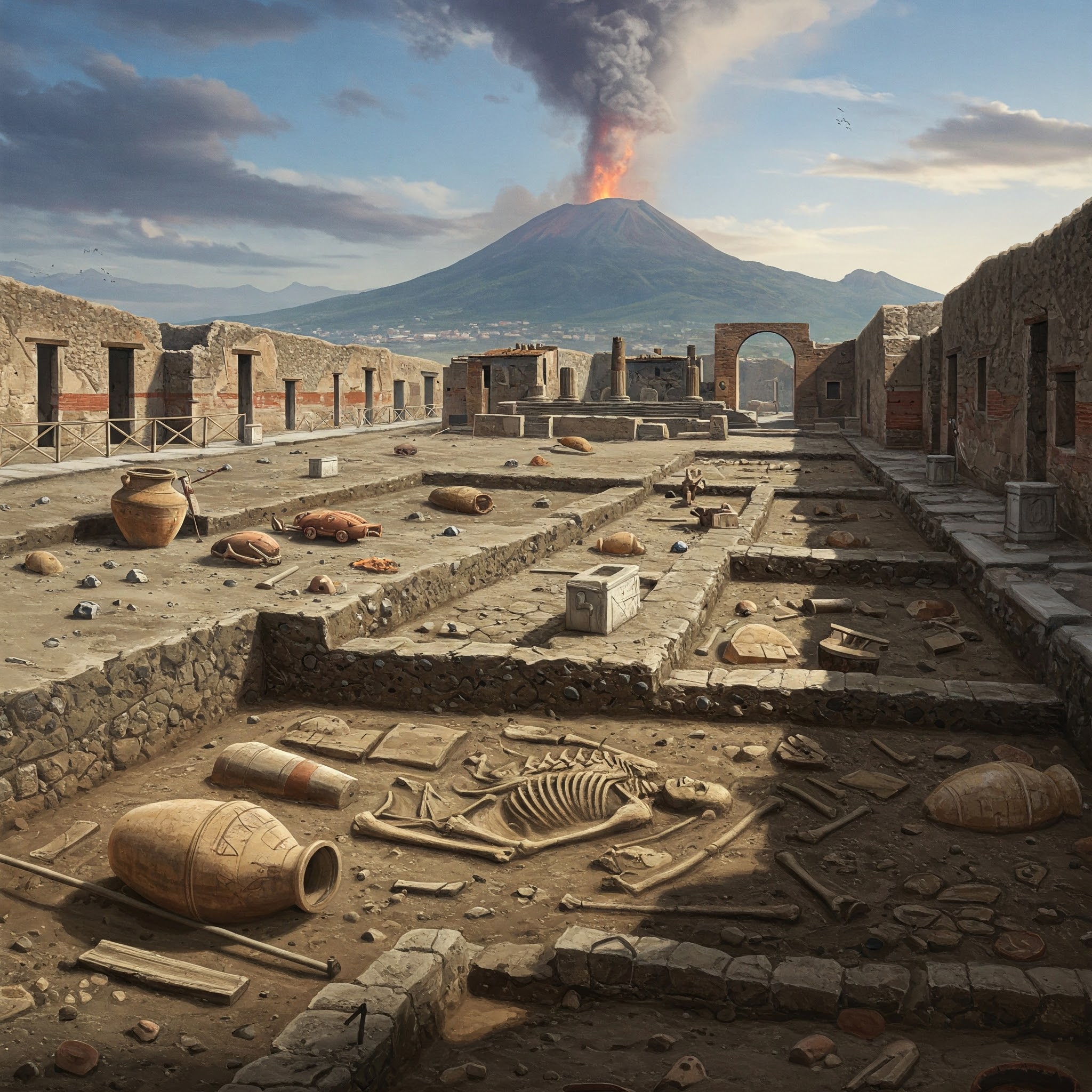
The Most Shocking Archaeological Finds
1. The Frozen Man of Herculaneum
One of the most remarkable discoveries was that of a man whose skull exploded due to the intense heat. His remains, found in Herculaneum, suggest that he evaporated instantly. Scientists have identified tiny black fragments in his skull that are believed to be vitrified brain tissue—one of the few known cases in history.
2. Pompeii’s “Last Fugitive”
In 2023, archaeologists discovered the skeleton of a man who tried to escape Pompeii. His body was found in a previously unexplored alley, crushed by a falling stone. His remains tell the tragic story of a desperate attempt to escape.
3. A wealthy man’s treasure chest
A wooden chest was found in Pompeii that had been buried in ash for centuries. Inside were priceless artifacts: delicate perfume bottles, gold jewelry, and medical instruments. Experts estimate its value at over $50,000, revealing insights into the lives of the Roman elite.
4. The Library of Charred Scrolls in Herculaneum
One of the most intriguing discoveries is the Villa of the Papyri, where hundreds of ancient scrolls were carbonized but preserved. Using artificial intelligence and X-ray technology, researchers are now deciphering these lost texts, which could rewrite our understanding of ancient philosophy and literature.
5. The Slave Quarters of Civita Giulia
Archaeologists have found a perfectly preserved slave room near Pompeii. The modest space contained wooden beds, clay jars, and even a child’s toy. This rare discovery offers a glimpse into the lives of enslaved people in ancient Rome.
What scientists say
Experts are continuing to study the finds to understand the extent of the destruction and the lives of those who died.
Dr Domenico Camardo, archaeologist at Herculaneum:
“The intensity of the heat was so extreme that soft tissue instantly evaporated, leaving bones in extraordinary detail.”
Dr Sophie Hay, Pompeii specialist:
“The eruption not only preserved a tragic moment in time, but also gave us an unparalleled insight into the daily lives of the Romans.”
Professor Giuseppe Scarpati, volcanologist:
“The pyroclastic surge of Vesuvius was a force of nature that left no chance of survival. It is a vivid reminder of the power hidden beneath our feet.”
The eruption of Mount Vesuvius was one of the most catastrophic events in history, but its tragic legacy has given modern science extraordinary knowledge. From frozen brain tissue to lost manuscripts, these archaeological discoveries continue to transform our understanding of ancient Rome.
For more incredible discoveries, follow Natural World 50 at naturalworld50.blogspot.com.


Comments
Post a Comment