
Scotland: The True Birthplace of Football?

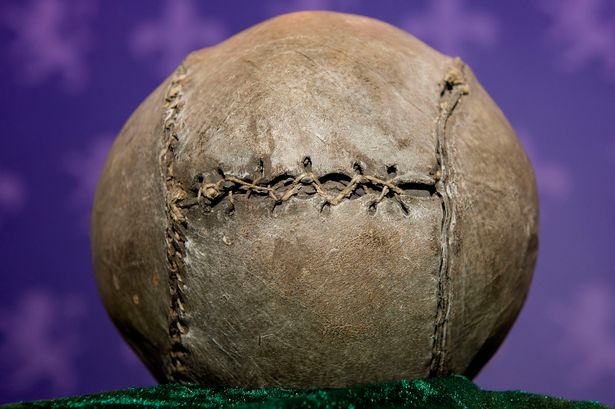
Recent archaeological discoveries in Anwoth, Kirkcudbrightshire, Scotland, have unveiled compelling evidence that organized football was played in the 17th century, predating England's Football Association by nearly two centuries.

📜 Historical Evidence Unearthed

Sports historian Ged O'Brien uncovered a letter from Reverend Samuel Rutherford, dating between 1627–1638, describing locals playing football on Sabbath afternoons. To halt these games, Rutherford ordered stones to be placed across the field. Archaeologists have since discovered a line of 14 stones at the site, corroborating Rutherford's account.

🧪 Scientific Validation

Soil analysis confirms that the stones were placed during the 17th century, supporting the claim that structured football matches occurred in Scotland well before the sport's codification in England in 1863.

⚽ Redefining Football's Origins

These findings challenge the long-held belief that modern football originated in England. O'Brien asserts that this Scottish field hosted regular matches with teams and agreed-upon rules, making it the true ancestor of the modern game.

For a deeper dive into this discovery, refer to authoritative sources:

  • The Independent
  • The Times
  • The Scottish Sun

📚 Further Reading

Enhance your understanding of football's rich history with these recommended books:

  • Scotland 42 England 1: An Englishman's Mazy Dribble through Scottish Football
  • We Are Scottish Football
  • Футбол. Історія та статистика. Енциклопедичний довідник

Stay tuned to UNIVERSE OF NATURE for more intriguing insights into the natural world and human history.

Comments

IN TREND

NASA’s Webb Uncovers Methane on Interstellar Comet 3I/ATLAS: A Cosmic Breakthrough

Imagine looking up at the night sky and realizing that the tiny, distant glimmer you see isn't just a remnant of our own cosmic neighborhood, but a visitor from a completely different solar system. The universe is whispering secrets to us, and for the first time in human history, we have the ears to listen. The James Webb Space Telescope (JWST) has just shattered our understanding of interstellar travelers by detecting methane on the comet 3I/ATLAS. This isn't just a chemical reading; it is a profound connection to the unknown, a bridge built of stardust and science that links our home to the mysterious voids between stars. The Arrival of an Interstellar Messenger For decades, astronomers dreamed of catching a glimpse of an object originating from outside our solar system. In 2017, we met 'Oumuamua, and later, 2I/Borisov. However, the discovery of 3I/ATLAS —often referred to as an interstellar comet—has provided us with a laboratory like no other. When this icy wanderer...

Green Energy Costs to 2035: Prices & Trends

Green Energy Costs to 2035: Why Solar and Wind May Rise While Batteries Fall The global renewable energy revolution is accelerating. Governments, corporations, and households are investing billions in green energy systems. Yet a paradox is emerging: while the cost of generating solar power and wind energy may increase in the coming decade, battery storage prices are projected to decline significantly. Why is this happening? And what will it mean for consumers and investors by 2035? This evergreen analysis explores the economic forces shaping energy markets, provides price forecasts in U.S. dollars, and explains how global trends could redefine the cost of clean electricity. Why Green Energy Became So Affordable Over the past 15 years, renewable technologies have experienced dramatic cost reductions. According to the International Renewable Energy Agency (IRENA) , global weighted-average costs of solar photovoltaic electricity dropped by nearly 90% between 2010 an...

Unearthing the Secrets of Notre-Dame: The Archaeological Discovery of the Century

Imagine standing in the heart of Paris, surrounded by the echoes of modernity—the honking of taxis, the bustle of tourists, and the vibrant hum of a 21st-century metropolis. Now, imagine peeling back the layers of time, descending deep into the cool, silent earth beneath the scarred but resilient frame of Notre-Dame Cathedral. What lies beneath is not merely dirt and stone; it is a time capsule, a bridge across millennia, and quite arguably, the most significant archaeological find in modern French history. When the catastrophic fire of 2019 ravaged the cathedral, the world watched in heartbreak. But from the ashes, a new narrative emerged. As architects and historians prepared to reconstruct the spire, they stumbled upon secrets that had been buried for nearly two millennia. This is the story of the "dig of the century," where ghosts of the past finally meet the light of the present. Who Excavated the Site? The Guardians of History The monumental task of excavating ben...