
Why Haven’t We Returned to the Moon? A Secret Report to the US Congress

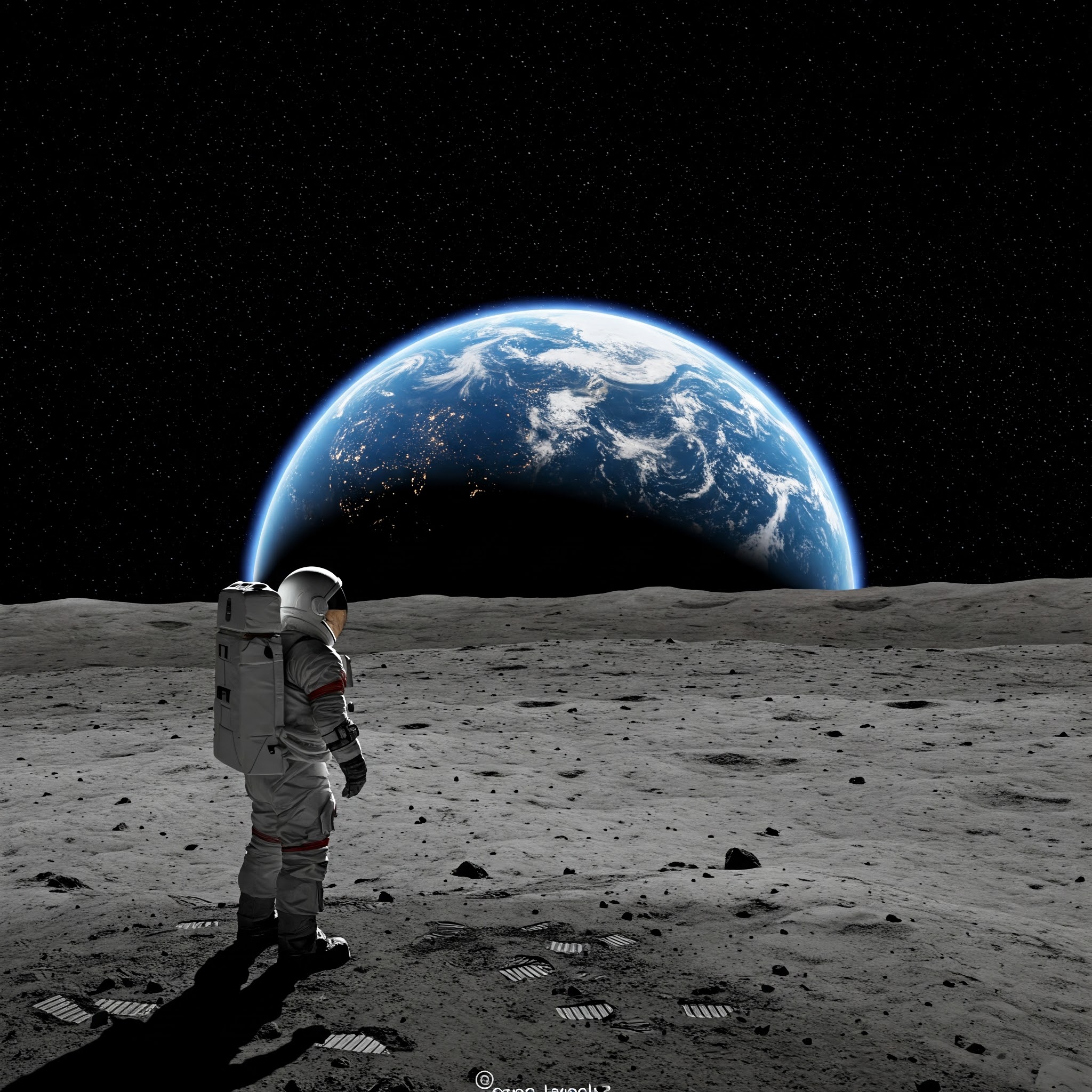
The moon has fascinated humanity for centuries. We landed there in 1969, proving that space travel is possible. But why haven’t we returned in over 50 years? Official reports cite costs, shifting priorities, and technological challenges. But a secret congressional report suggests something far more mysterious.
The Cost of Lunar Exploration

Returning to the moon doesn’t come cheap. The Apollo program cost $25.4 billion (over $150 billion today). Modern missions like Artemis require even more funding. NASA’s budget for 2024 alone is $27 billion, but delays continue.

Hidden Truth in US Congressional Report

Declassified Sections Hint at Obstacles Beyond Money:

Unexplained Anomalies on the Moon

Lost Apollo Footage and Missing Telemetry

Radio Interference from the Far Side of the Moon

The Far Side of the Moon, forever hidden from Earth, is a source of speculation. Some claim it is home to man-made structures, while others suggest that strong electromagnetic interference is disrupting communications.

Quotes from Astronauts and Officials

Buzz Aldrin: “There’s something out there watching us.”

Neil Armstrong (allegedly to a professor): “They were there. They warned us.”

Dr. John Brandenburg (plasma physicist): “There’s reason to believe that there was an ancient nuclear event on Mars and possibly the Moon.”

Conspiracy: Who doesn’t want us back?

There are many theories:

Alien presence: Did Apollo 11 encounter aliens?

Secret military bases: Are world powers already using the Moon?

Economic interests: Will a return reveal hidden lunar resources?

How far away is the Moon really?

The Moon is 384,400 km (238,855 miles) from Earth. But with modern technology, getting there should be easier. So why haven’t we returned?

Despite the official reasons, secrecy and unanswered questions fuel speculation. With the upcoming Artemis missions, will we finally uncover the truth? Or will history repeat itself, leaving us in the dark again?

Stay up-to-date on cosmic mysteries in Natural World 50!

Comments

IN TREND

Green Energy Costs to 2035: Prices & Trends

Green Energy Costs to 2035: Why Solar and Wind May Rise While Batteries Fall The global renewable energy revolution is accelerating. Governments, corporations, and households are investing billions in green energy systems. Yet a paradox is emerging: while the cost of generating solar power and wind energy may increase in the coming decade, battery storage prices are projected to decline significantly. Why is this happening? And what will it mean for consumers and investors by 2035? This evergreen analysis explores the economic forces shaping energy markets, provides price forecasts in U.S. dollars, and explains how global trends could redefine the cost of clean electricity. Why Green Energy Became So Affordable Over the past 15 years, renewable technologies have experienced dramatic cost reductions. According to the International Renewable Energy Agency (IRENA) , global weighted-average costs of solar photovoltaic electricity dropped by nearly 90% between 2010 an...

Top 10 Most Endangered Animals in the World (2025 Update)

Updated in 2025: Habitat destruction, climate change, and poaching are pushing countless species toward extinction. Here are the 10 most endangered animals in the world right now – and how we can still help save them. Sources: IUCN Red List, WWF, National Geographic, Wildlife Conservation Society 🦍 1. Cross River Gorilla ( Gorilla gorilla diehli ) Status: Critically Endangered Population: Fewer than 300 This elusive gorilla species lives in remote forests on the Nigeria-Cameroon border, threatened by habitat fragmentation and illegal hunting. 🐯 2. Amur Leopard ( Panthera pardus orientalis ) Status: Critically Endangered Population: About 120 Native to the Russian Far East, it’s the rarest big cat, threatened by poaching and habitat loss. 🐢 3. Yangtze Giant Softshell Turtle ( Rafetus swinhoei ) Status: Critically Endangered Known survivors: 2 Only two are known to exist. Breeding efforts are critical to preventing extinction. 🐬 4. Vaquita ( Ph...

The 10 Most Treacherous Seas and Oceans on Earth

 The ocean is a majestic force of nature — vast, mysterious, and at times, deadly. From massive rogue waves to invisible underwater currents, some parts of our blue planet are especially unforgiving. Here are the 10 most treacherous seas and oceans in the world where danger is always lurking beneath the surface. 1. The Bermuda Triangle (North Atlantic Ocean) A zone of unexplained disappearances, the Bermuda Triangle remains one of the ocean’s greatest mysteries. Countless ships and planes have vanished without a trace, fueling legends and conspiracy theories. 2. The Drake Passage (Southern Ocean) Located between Cape Horn and Antarctica, the Drake Passage is infamous for brutal winds and towering waves, making it one of the most dangerous shipping routes on Earth. 3. The South China Sea Highly trafficked and prone to violent typhoons, the South China Sea presents both natural and political hazards. Its unpredictable storms can capsize even large vessels. 4. The North Sea Though rel...